

SINCE the 1900s, American-style democracy taught us its rituals, which we embraced with enthusiasm but imbued with local pinoy flavor: festive campaigns, songs, “budots” dances, baby-kissing and, on rare occasions, some discussion of public policy.
Then we vote.
What happens afterward is another matter. We have political parties. There is the Nacionalista Party, Liberal Party, PDP-Laban, Lakas-CMD and assorted others whose acronyms sometimes survive longer than their principles.
Yet ask the ordinary voter what fundamentally distinguishes one from another — economically, socially, constitutionally — and silence. Ask a politician, and he may first have to remember which party he currently belongs to.
Ideology for rent
We have perfected a uniquely Filipino species of political wildlife: the political butterfly. It flits gracefully from flower to flower particularly when the nectar in Malacañang changes every six years.
Yesterday Liberal. Today PDP-Laban. Tomorrow Lakas. The day after tomorrow — well, let us first see who is leading the presidential surveys.
This phenomenon is sometimes called political pragmatism. That is the respectable term. Ordinary mortals might call it opportunism. And for those less inclined toward diplomatic language — political prostitution.
I wrote years back that politicians genuinely adhering to a party because of ideology and values are an endangered species. Our political environment rewards adaptability instead. Personal popularity and local machinery frequently matter more than party principles.
We should perhaps stop criticizing these politicians. They are merely adapting to their habitat. The problem is the habitat.
Our parties are not really political parties in the mature democratic sense. They are temporary electoral corporations organized principally to win elections. Many become extremely energetic before election day and mysteriously fall asleep afterward. The technical term is hibernation.
Wanted: Winnability
Because parties possess little ideological identity, their overriding criterion becomes winnability. Thus begins the great Philippine talent search. Wanted: candidates for public office. Qualifications: preferably famous. Actors welcome. Athletes encouraged. Television personalities highly desirable. Social-media following advantageous. Ability to dance and sing during campaign rallies a plus.
Knowledge of public administration optional. Ideology? We will discuss that after the surveys. This is not an indictment of actors, athletes, or broadcasters. Some may become excellent legislators. It is a denunciation of a political system in which celebrity can substitute for preparation because parties themselves have largely abandoned their responsibility to identify, educate and develop future leaders.
I made this argument years ago: When winnability overwhelms ideological perspectives, parties naturally recruit people already popular with the masses, while political creed and principles retreat discreetly to the back room.
Then we blame the Filipino voter. We solemnly repeat: People deserve the government they elect. Perhaps. But democracy presupposes meaningful choices. If the menu offers adobo, adobo with egg, adobo without egg and yesterday’s adobo reheated under a different party acronym, blaming the customer for not ordering steak seems slightly unfair.
Who owns the party?
Here lies the more fundamental problem. In genuine political parties, ordinary citizens become members because they believe in something. They pay dues. They participate. They debate policy. They help select leaders and candidates. The party belongs to its members.
In the Philippines, members generally do not finance parties. Candidates themselves, political dynasties, business interests and wealthy patrons do. And whoever pays the orchestra normally selects the music. I argued this as early as 2013: When members do not pay dues, they possess no meaningful stake in the organization. The financiers become the real stakeholders and consequently acquire enormous influence over who runs and what programs are presented to voters.
This is patronage politics disguised as party politics. It also explains the famous migration toward whichever president occupies Malacañang. In our centralized presidential system, political manna traditionally descends from above. Congressmen and local officials therefore discover previously unsuspected philosophical affinities with the victorious president.
It is remarkable how rapidly ideological enlightenment occurs after an election.
What a real party should be
For decades, those of us in the Centrist Democratic movement argued that a genuine political party requires at least four things. First, real members who pay dues. Second, internal democracy and discipline. Third, an identifiable ideology translated into a program of government. Fourth, laws governing political parties, their financing and accountability.
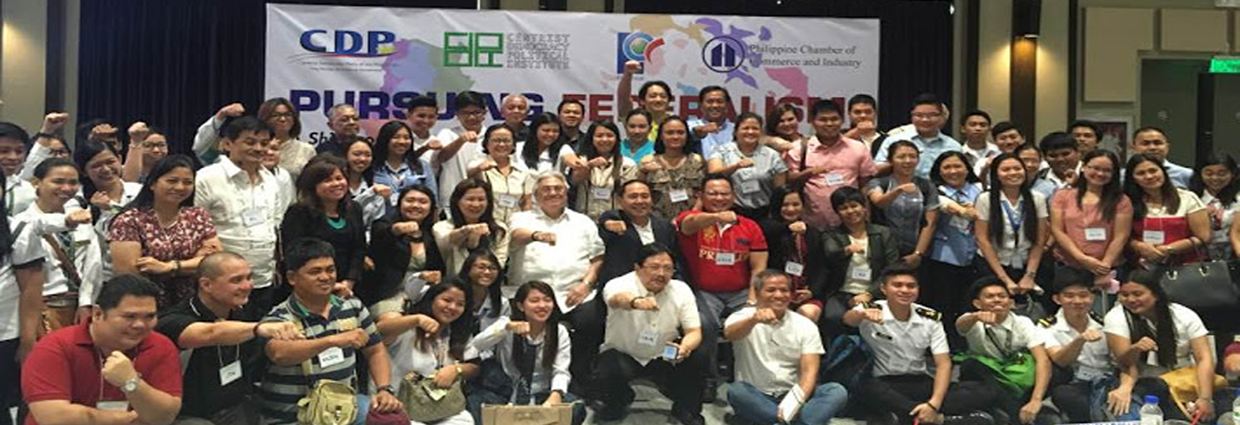
At CDP we tried, imperfectly, to practice these principles. Members paid annual dues, underwent political orientation and training, participated in decision-making, and could vote and be voted into party positions. The party attempted to remain active in communities between elections rather than materializing every three years like a political apparition.
The point here is not that CDP discovered political salvation. We did not. The point is that political parties must become institutions rather than personal vehicles. They should recruit young people long before those young people become candidates. They should teach them political philosophy, economics, constitutional government and public administration. They should allow them to rise through party ranks. A future congressman should not suddenly discover public policy after winning an election. Neither should a future senator require his first committee hearing to discover what his committee does.
Politics between elections
Perhaps the greatest difference between a real party and ours is what happens when there is no election. A genuine party continues working. Its members debate policies. Local chapters meet. Citizens bring grievances to their representatives. Potential leaders undergo training. Elected officials return to explain their votes and defend their conduct.
Most importantly, the party can punish its own.
Imagine that.
An elected politician violates the platform under which he was elected. The party calls him to account. In our system, the politician is more likely to call the party to account — and perhaps take half its members with him. This inversion tells us everything.
Politicians without politics
Last July 22, this domestic series began with a simple paradox: The Philippines has strong people but a weak State. We then examined our perpetual search for the president who will finally save us, and why institutions never seem able to outgrow the personalities temporarily occupying them.
Political parties are the missing link. We cannot build strong democratic institutions while our principal vehicles for capturing political power remain weak, personality-driven and financed by patrons.
We cannot complain about dynasties while maintaining parties that political families can capture. We cannot demand programmatic government when parties themselves possess no recognizable programs. And we cannot keep electing political saviors while constructing an electoral system designed to manufacture them.
Perhaps we have misunderstood the problem all along. The Philippines does not suffer from a shortage of politicians. Judging from every election, we have an inexhaustible supply.
What we lack are political parties worthy of a democracy.
And this becomes critically important because if we ever replace our presidential system with a parliamentary one, those parties will no longer merely decorate our democracy. They will have to govern it. That creates an uncomfortable question for next week:
Can we build a parliamentary democracy using political parties that are not really political parties?
The short answer is no.
The longer answer may explain why changing the Constitution without first changing our politics could merely give the same old politicians a brandnew playground.
000




